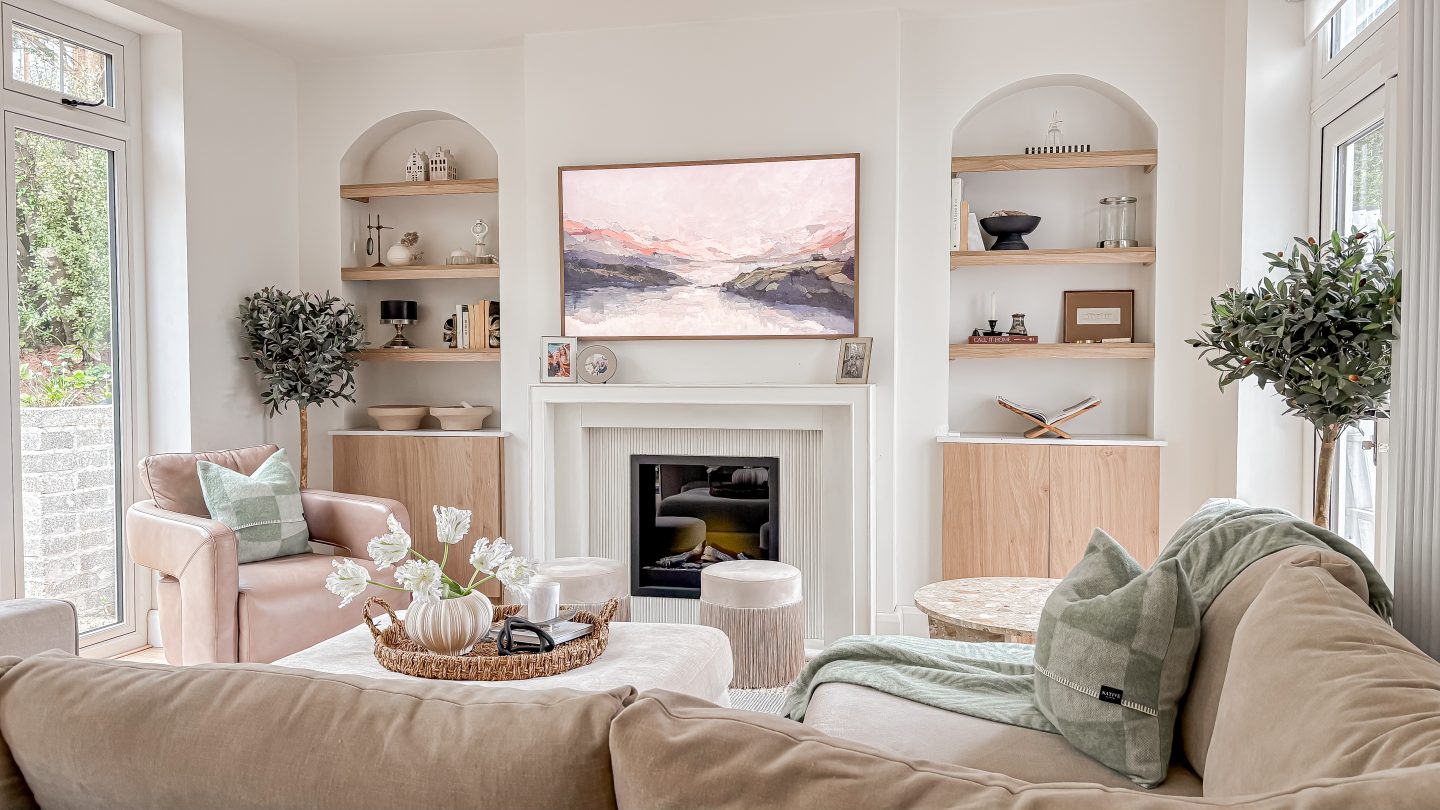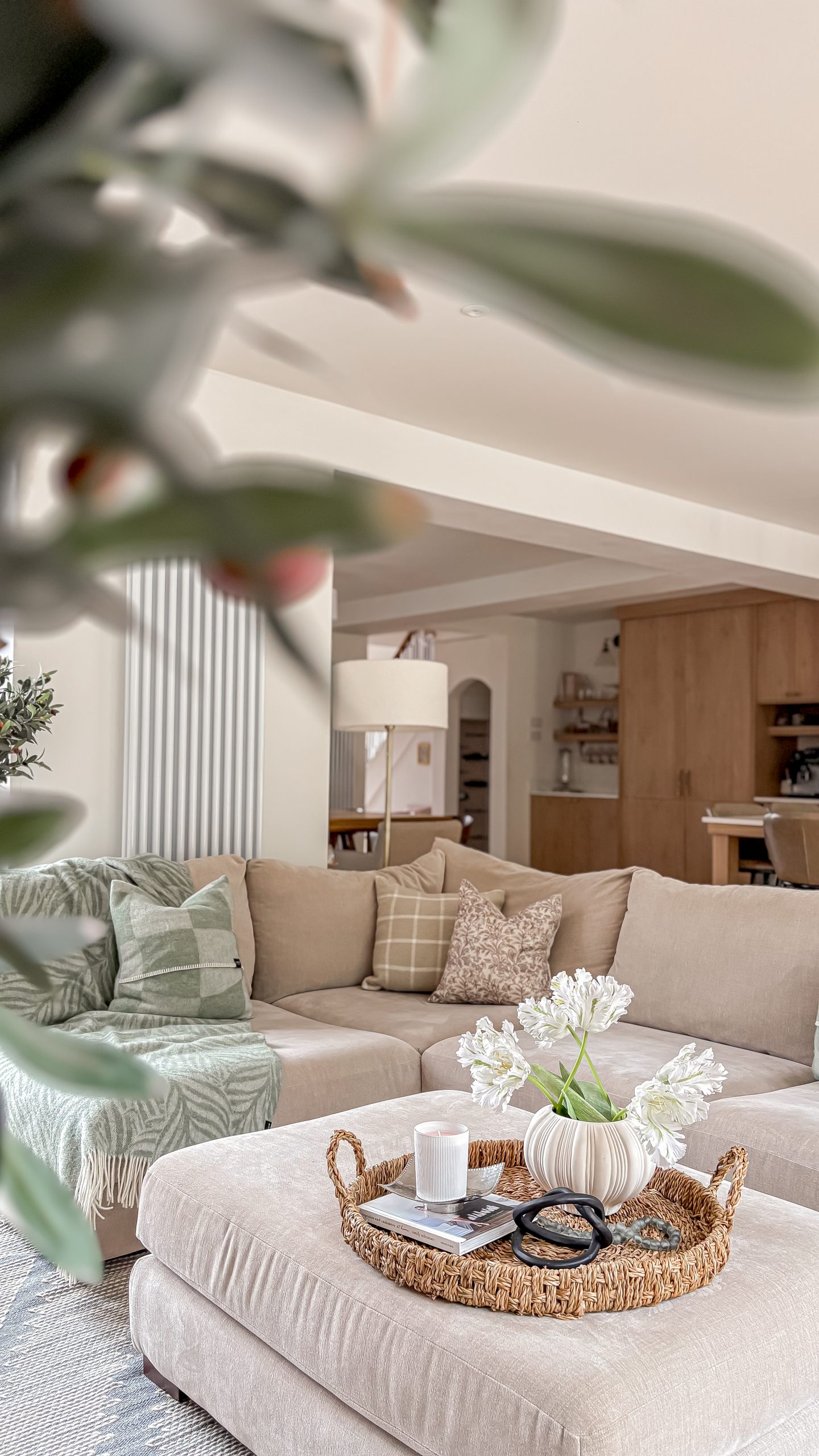
When you think about designing a room, your first instinct is probably to fill it. A sofa here, a lamp there and maybe a gallery wall to tie it all together. However, the secret to a beautiful, calming space may lie in what you leave out.
In interior design, negative space refers to the empty or unoccupied spaces between or around objects. It might look like a blank wall, an uncluttered countertop or simply the space between pieces of furniture. While it can feel strange at first, these areas are actually what give a room balance, clarity and a sense of calm.
This is especially important in open plan spaces like our 1930s renovated home, where each area needs to be ‘zoned’ in order to work.
Why Empty Space Matters More Than You Think
Negative space plays a key role in how a room feels. When every surface is filled and every corner is occupied, your eyes don’t know where to land. The result is visual clutter, even if every individual piece is beautiful.
Alternatively, leaving space between objects creates breathing room. It helps highlight your favorite pieces and gives each item more presence. It is a pause that allows the eye to rest and move naturally through a space.
There’s also a psychological benefit. Your brain tends to favour order, so ongoing visual clutter can become mentally exhausting and negatively impact your working memory, making it harder to focus. Messy environments have also been associated with increased cortisol levels and higher stress and anxiety, which can further disrupt your ability to learn.
Meanwhile, negative space can create a sense of order and calm by reducing that cognitive load. This design approach isn’t about stripping your home down to the bare minimum, as too much empty space can make a room feel cold or unfinished. Instead, thoughtful balance is key.
This has become more important in recent years as more and more of us are working from home.

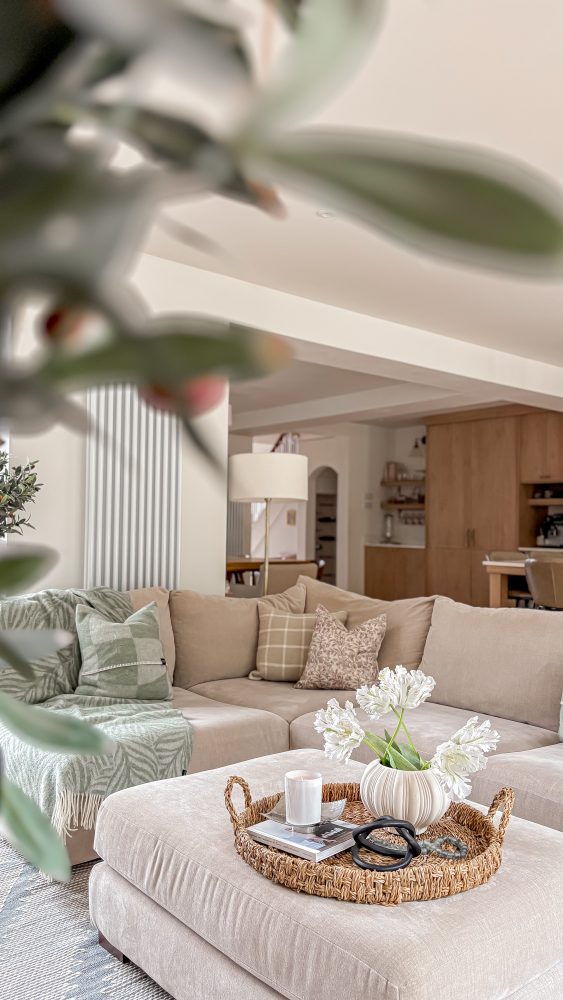
How to Know When Less Really Is More
One of the biggest mistakes people make when decorating is feeling like every space needs to be finished. That empty corner doesn’t always need a chair, and that shelf doesn’t need five decorative objects. Trying to fill every gap is one of the fastest ways to make a room feel overcrowded.
Think of your room like a composition. If everything is competing for attention, nothing stands out. When you leave space around key elements, such as a beautiful armchair or a sculptural light fixture, those pieces become focal points.
Kitchens are a great example of how negative space can work in practice. While cabinets are essential, they don’t always need to be visually dominant. Choosing simple, understated cabinetry can act as a kind of background, allowing lighting, textures or decor to stand out. Trends in kitchen design continue to favour softer contrast, warmer tones, natural textures, muted finishes and elegant appliances, which naturally support visual breathing room.
How to Let Your Rooms Breathe
Start with your furniture layout. Instead of pushing everything against the walls or clustering pieces too closely, give each item some room. Even a few extra inches between a sofa and a coffee table can make a space feel more open and easier to move through.
Bringing furniture into the room is really important in open plan spaces.
Walls are another easy place to embrace negative space. You don’t need to fill every inch with art or shelves. A single statement piece on an otherwise blank wall often has more impact than a crowded gallery.
It is also useful to use colour and texture to create visual breathing room. Light colours make rooms seem larger, and simple materials naturally open up a space. Minimal and neutral interiors feel calm by relying on restraint rather than excess.
You can look to design styles that naturally embrace negative space. For example, Japandi interiors blend Scandinavian and Japanese aesthetics to focus on minimalism and purpose, removing unnecessary clutter so spaces feel calm, open and functional. This approach shows how choosing fewer, more meaningful pieces can make a room feel larger and more relaxing without sacrificing style.
Finding the Right Balance
Strive for a mix of filled and unfilled areas, and moments of interest paired with moments of calm. If your space feels overwhelming, try removing one or two items and see how it changes the flow. If it feels too sparse, add something meaningful rather than something just to fill the gap. Ultimately, designing with negative space encourages you to slow down, choose pieces you truly love and give them the space they deserve.