
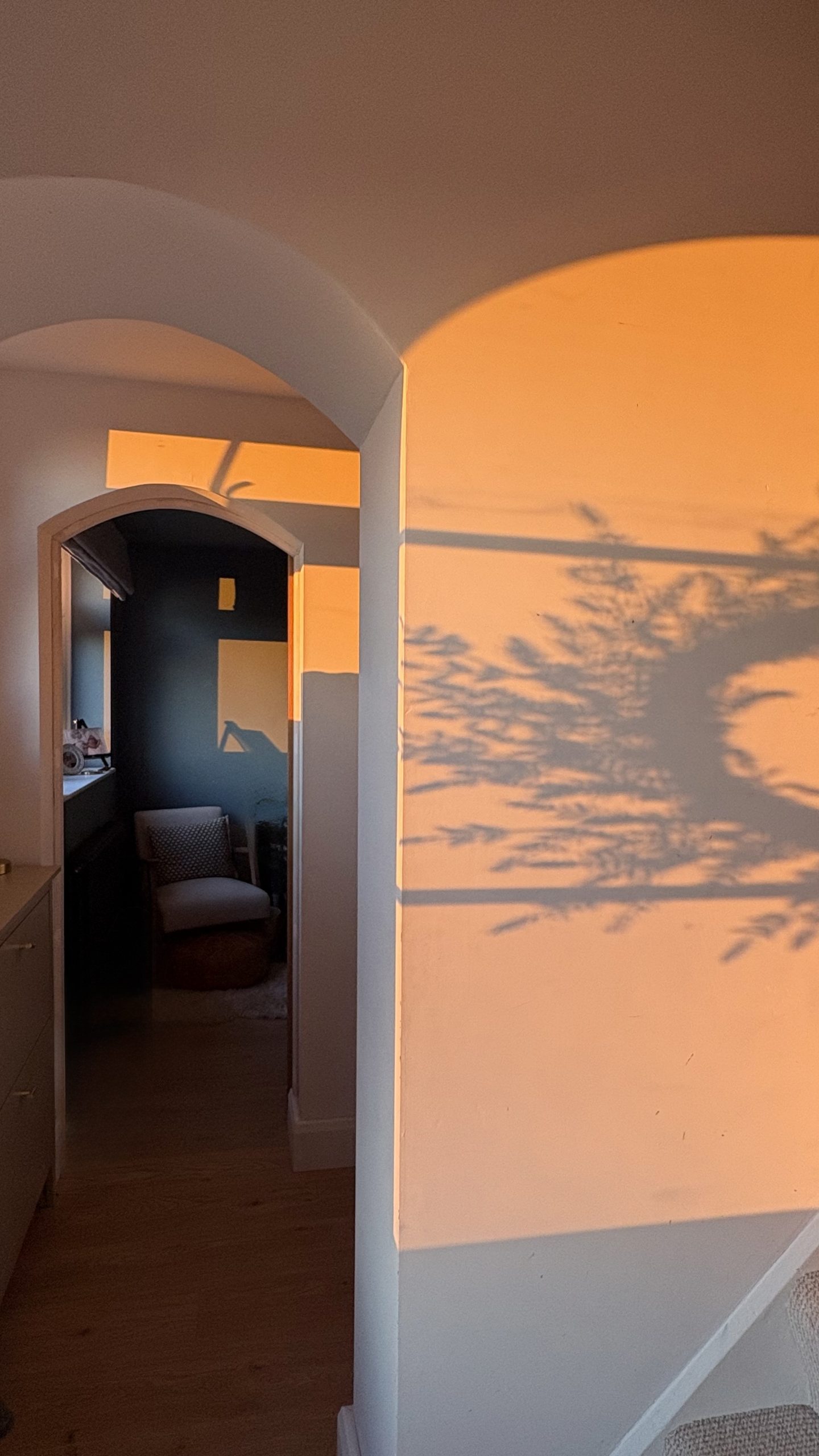
For years, the accent wall was the easiest way to add personality to a room. You picked one wall, painted it a bold colour and kept the rest neutral. That formula is losing its appeal, and a handful of calmer, more cohesive styles are stepping in to take its place. If you love a neutral, minimal look, here are five trends worth trying instead.
1. Whole-Room Colour Drenching Takes Center Stage
Designers are increasingly steering clients toward covering an entire room in a single shade rather than limiting colour to a single wall, a technique known as colour drenching. Instead of fragmenting a room with contrast, this approach wraps the walls, trim and ceiling in one tone, which reads as calmer and more intentional than a single bold wall ever could.
We’ve colour drenched our office in Farrow and Ball DeNimes and we absolutely love it! It really pops against our white walls in the hallway too.
To pull this off without it feeling overwhelming, stick to a soft or muted hue and let your furniture provide the visual variety. Building a simple palette before you start can help.
- Choose one dominant wall colour for roughly 60 percent of the room
- Pick a secondary tone for larger furniture pieces
- Reserve your boldest accent colour for small decor items
Working through these proportions ahead of time makes it easier to commit to one cohesive look rather than defaulting to a single contrasting wall.
2. Venetian Plaster and Limewash Add Texture Instead of Contrast
Instead of reaching for a can of paint in a different shade, more homeowners are adding texture in a tone close to their existing walls. Venetian plaster and limewash finishes create subtle movement and depth that shifts with the light throughout the day, so the wall still feels like a focal point without the harsh line an accent wall creates.
These finishes tend to work best in warm, earthy colors like clay, terracotta or soft greige. Because the texture itself does the visual work, you can use it across an entire room rather than confining it to a single wall.
If you are weighing a plastered finish against something like patterned wallpaper, it helps to compare how each option holds up over time and the time commitment of upkeep. Interior paint can last around seven years before it needs a refresh, while high-quality wallpaper can last a decade or longer, so your maintenance tolerance is worth factoring into the decision. It’s also worth thinking about how often you may want to change your wall finishes. If you like to switch it up, paint could be a stronger option due to the shorter time period in between refreshes.
3. Wood Slat Walls Bring Warmth Without a Paint Can
Vertical wood slats have become a go-to alternative for adding dimension to a media wall, headboard or hallway. Because the material itself provides the interest, slat walls fit naturally into neutral and minimal interiors without introducing a new colour at all.
Walnut and smoked oak tones are currently trending, replacing the lighter natural oak that dominated a couple of years ago. Although we’ve actually decided to mix oak and walnut in our home!
Beyond the visual texture, slats hide TV cords neatly behind the wall and give the whole setup a built-in, architectural look.
4. Architectural Details Replace Painted Focal Points
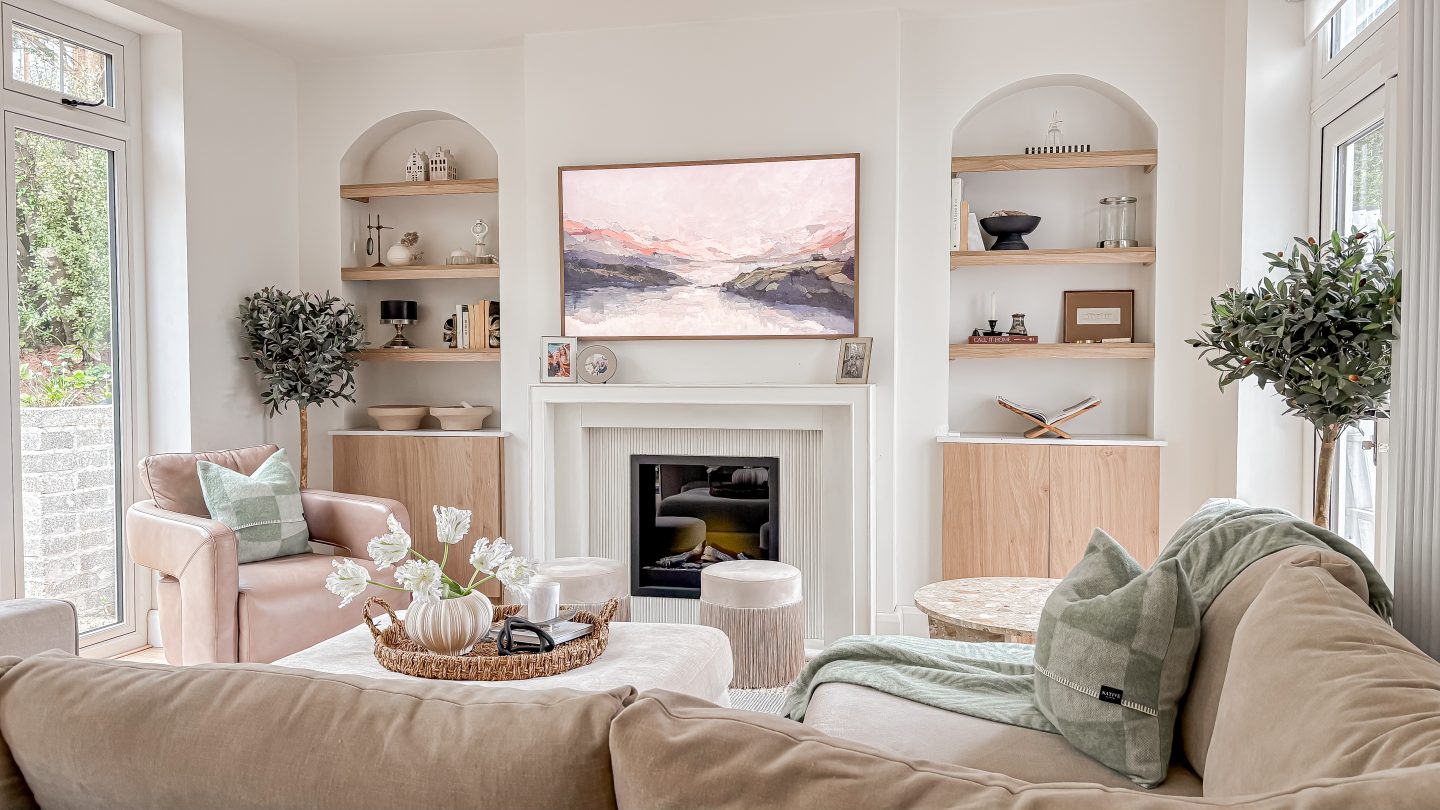
Instead of painting one wall to create a moment, many homeowners are letting the room’s architecture do the job. Archways, wider door casings and simple wainscoting details define spaces and draw the eye, especially in open floor plans where kitchens, living rooms and dining areas blend together.
This trend fits especially well if you already lean neutral, since the interest comes from shape and shadow rather than colour. A single painted archway or a run of simple trim can add just as much personality as a bold wall, with none of the upkeep.

5. Tonal Ceilings Become the New Fifth Wall
Rather than skipping the ceiling entirely, some homeowners are treating it as the fifth wall and giving it a soft, tonal update instead of a stark contrast. Keeping the walls neutral and adding a slightly deeper or warmer shade overhead creates a subtle sense of depth without the visual weight of a fully painted accent wall.
This works especially well in smaller rooms, offices or nooks where a bold wall might feel closed in. Choosing that ceiling shade is easiest once you have already mapped out a simple colour palette for the room, so the tone overhead feels connected rather than random.
These Trends Support Your Neutral Style
None of these styles require you to abandon your love of clean, neutral spaces. Colour drenching, tonal plaster, wood texture, architectural detail and a softly finished ceiling all offer the same payoff an accent wall used to promise, more depth and personality, without the dated feeling of a single contrasting wall. Start with whichever trend fits the room you are already planning to refresh, and build outward from there.
This is a sponsored post – really grateful as it’s made this post possible.
